

Advancing Computational Research • Training Global Scientists • Driving Scientific Innovation
|Registered under the Ministry of SME, Government of India| | ISO 9001: 2015 Certification: Accredited by UASL, United Kingdom |

Gold Nanospehere (Au28) 1 nm Structure

Vanadium Diselenide (VSe2) Bilayer Structure

Anion Rich Cadmium Sulphide Nanosphere (1 nm)

Titanium Dioxide (TiO2) Nanowire Aspect Ratio 100

Gold Nanosphere on Graphene Heterostructures
10-Hrs Online Hands-on Training
|Online Live Sessions (1 hour Daily)|
Date: 17 September 2026 - 26 September 2026
Timing: Morning Batch: 9:00 AM IST - 10:00 AM IST or Evening Batch: 9:00 PM IST - 10:00 PM IST
|Can't attend live? No worries! Every session is recorded, and participants receive access to the complete lecture recordings|
|Programming and Coding Knowledge is Not Required|

Density Functional Theory (DFT) Modelling of Advanced Materials
Module A: Designing of Solid State Materials, Nanospheres, Quantum Dots, 2D-Layered Structures, Core-Shell NPs, Nanowires and rods, Heterostructures
Module B: Electronic Structure studies (Computed Band gap <-> UV-vis spectrum, Band Structure and Density of States), direct vs indirect bandgap materials, Electron and Hole Mobilities/effective masses
Module C: SCF Convergence, Strucutral Optimization, Intermolecular Interactions Studies via Molecular Dynamics: Application in Sensors, Catalysis, and Surface Adsorption
Module D: Vibrational Frequency analysis, Magnetization
Software Packages: Quantum Espresso, Vesta, and Avogadro
Speaker: Dr. Nikhil Aggarwal [Acad. Head (CACR); Ph.D. Chemical Science, IIT Madras; M.Sc. (University of Delhi)]
Introduction
We are glad to announce a 10-Hours Online Hands-on Training program on DFT Modelling of Advanced Materials [DFT-Advanced] (using Free Software Tools: Quantum Espresso, Burai, and Vesta).
-
In recent years, major scientific and industrial interest has been attracted to the multiscale structures involving nanoparticles, thin films, monolayers, etc, and their structure-property relationships. The need for such novel materials demands understanding the changes in structural and dynamical properties caused at the microscopic level.
-
Electronic structure calculations from Density functional theory (DFT) are a well-established approach for predicting a large range of material properties. Not surprisingly, many advances have been made in theoretical models and simulation approaches to predict electronic structure, optical behavior, and magnetic and mechanical properties.
Deadline- 9:00 PM IST, 16th September 2026


Distinguished International Advisory Board
Featuring Faculty from IITs, NITs and Leading Academic Institutions
%20Satyajit%20Banerjee.jpg)
Prof. (Dr.) Satyajit Banerjee

Professor
Indian Institute of Technology (IIT) Kanpur
Feinberg Postdoctoral Fellowship Awards, Weizmann Institute of Science, Israel
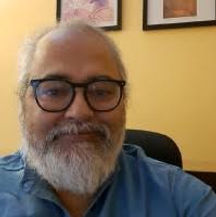
Prof. (Dr.) Sumit Basu

Professor
Indian Institute of Technology (IIT) Kanpur
Postdoctorate: Netherlands at Delft University of Technology & University of Groningen
%20Subrato%20Bhattacharya.jpeg)
Prof. (Dr.) Subrato Bhattacharya

Professor
Banaras Hindu University

Dr. Dinesh Jagadeesan

Associate Professor
Indian Institute of Technology (IIT) Palakkad
Ontario Postdoctoral Fellowship from the Government of Ontario, Canada

Dr. Raghavendra S C

Associate Professor
Higher Colleges of Technology
United Arab Emirates (UAE)

Dr. Satyadeep Waiba
Assistant Professor
Indian Institute of Technology (IIT) Bombay
Postdoctoral Fellowship: University of Bayreuth, Germany

Dr. Suverna Trivedi
Assistant Professor
Indian Institute of Technology (IIT) Kharagpur
Fulbright Postdoctoral Fellow at the University of California, Berkeley

Dr. Sonal Shrivastava
Assistant Professor
Indian Institute of Technology (IIT) Patna
Visiting Researcher at Washington University St. Louis, USA

Dr. Ambuj Kumar Gautam
Assistant Professor
Indian Institute of Technology (IIT) Jodhpur

Dr. Madhusmita Mallick
Assistant Professor
Indian Institute of Technology (IIT) Bhubaneswar

Dr. Santanu Mandal
Assistant Professor
Indian Institute of Technology (IIT) Bhubaneswar

Dr. D N V V Konda Lutukurthi
Assistant Professor
Indian Institute of Technology (IIT) - ISM Dhanbad
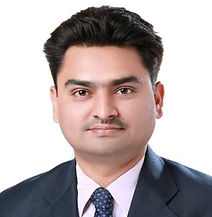
Dr. Manwendra Kumar Tripathi
Associate Professor
National Institute of Technology (NIT) Raipur

Dr. Sadhika Khullar
Associate Professor
Dr. B R Ambedkar National Institute of Technology (NIT) Jalandhar

Dr. Kumud Kant Mehta
Associate Professor
National Institute of Technology (NIT) Rourkela

Dr. Nabendu Paul
Assistant Professor
Maulana Azad National Institute of Technology (NIT) Bhopal
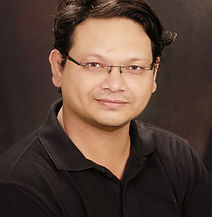
Dr. Paresh Salame
Assistant Professor
Institute of Chemical Technology (ICT) Mumbai

Dr. Anirban Dutta
Assistant Professor
Malaviya National Institute of Technology (NIT) Jaipur

Dr. Himanshu Pandey
Assistant Professor
Sardar Vallabhbhai National Institute of Technology (NIT) Surat
Dr. Kaushik Talukdar
Assistant Professor
National Institute of Technology (NIT) Meghalaya
Detailed Daywise Schedule
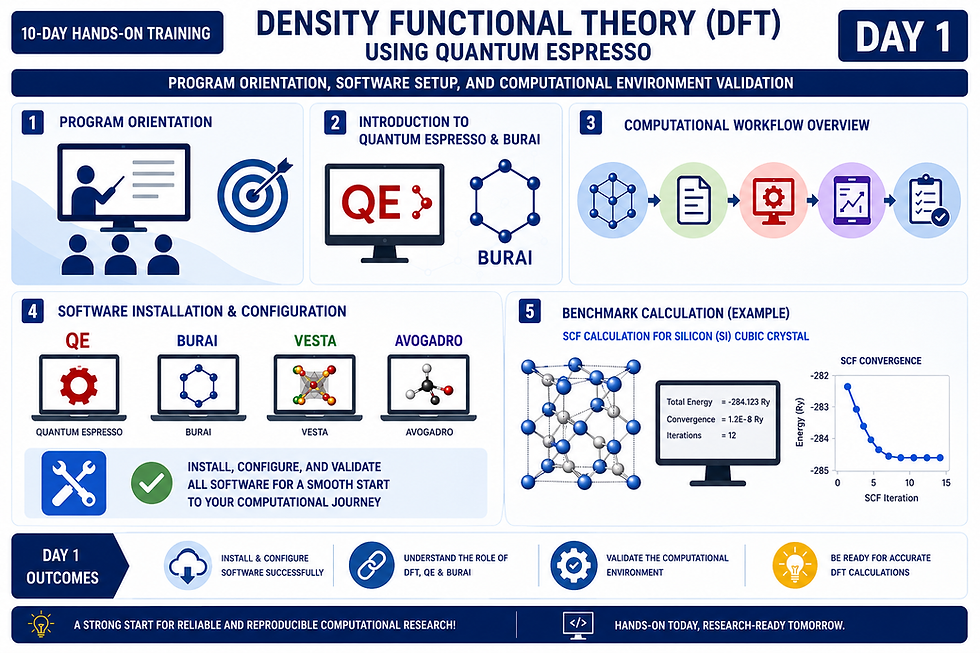
Day 1: Program Orientation, Software Setup, and Computational Environment Validation
-
Program Orientation
-
Introduction to the training program, learning objectives, course structure, and expected outcomes.
-
Overview of the computational workflow that will be followed throughout the program.
-
-
Introduction to Quantum ESPRESSO and BURAI
-
Fundamentals of Density Functional Theory (DFT) and its role in computational materials science.
-
Overview of the Quantum ESPRESSO simulation package: Capabilities, applications, and limitations for electronic structure calculations and materials modelling.
-
Introduction to the BURAI graphical user interface and its integration with Quantum ESPRESSO.
-
-
Software Installation and Configuration
-
Installation and configuration of BURAI and Quantum ESPRESSO.
-
Installation of VESTA for crystal structure visualization and designing.
-
Installation of Avogadro for molecular and crystal structure construction.
-
Execution of benchmark calculations to validate the integration between BURAI and Quantum ESPRESSO.
-
Troubleshooting common installation and configuration issues across Windows Operating Systems and hardware configurations.
-
Day 2: Preparing and Validating First-Principles DFT Calculations
-
Understanding the Quantum ESPRESSO Input Structure
-
Comprehensive discussion of Quantum ESPRESSO input file architecture and essential control parameters.
-
-
Selection of Pseudopotentials
-
Introduction to pseudopotential theory. Comparative analysis of Projector Augmented Wave (PAW) and Ultrasoft Pseudopotentials (USPP).
-
Guidelines for selecting appropriate pseudopotentials based on computational accuracy, efficiency, and research objectives.
-
-
Crystal Structure Engineering
-
Designing defect, doped and substituted crystal structures through atomic substitution: best practices
-
-
Hands-on DFT Calculation: Silicon Cubic Crystal
-
Performing the first Self-Consistent Field (SCF) calculation.
-
Interpreting total energy and SCF convergence behaviour.
-
-
Convergence Testing and Parameter Optimization
-
Systematic estimation of kinetic energy cutoff for wavefunctions (ecutwfc) and charge density (ecutrho).
-
Understanding the relationship between computational cost and simulation accuracy.
-
Establishing convergence criteria using quantitative energy analysis.
-
Day 3: Brillouin Zone Sampling and Electronic Structure Analysis
-
Reciprocal Space and Convergence of Brillouin Zone Sampling
-
Introduction to reciprocal space and the Brillouin zone.
-
Understanding lattice-dependent k-point grids and their influence on computational accuracy.
-
Best practices for selecting and optimizing k-point meshes for different crystal systems.
-
Systematic evaluation of k-point convergence.
-
-
Validation of Computational Results: Rapid Band Gap Estimation from SCF Calculations
-
Strategies for validating first-principles calculations and ensuring reproducibility.
-
Efficient estimation of band gaps directly from Self-Consistent Field (SCF) calculations.
-
Ionic Crystal: Band gap calculation of MgAl₂O₄ (Magnesium Aluminate Spinel). Verification of structural parameters before electronic structure calculations.
-
Covalent Molecular Crystal: Band gap calculation of C₆₀ Fullerene.
-
-
Validation Using Experimental and Database References
-
Comparing computed band gap values with published literature.
-
Utilizing the Materials Project database to validate computational results and assess simulation accuracy.
-
-
Importing Crystal Structures from Materials Databases
-
Importing and preparing crystal structures from the Materials Project database in BURAI for Quantum ESPRESSO simulations.
-
Day 4: Magnetic Property Calculations and Spin-Polarized Electronic Structure Analysis
-
Spin Configurations in Quantum ESPRESSO
-
Difference between spin-polarized (collinear) and non-spin-polarized calculations.
-
Selection of appropriate magnetic models based on the material system under investigation.
-
-
Initial Magnetic Moment (Starting Magnetization)
-
Physical significance of the starting magnetization (starting_magnetization) parameter.
-
Guidelines for assigning initial spin values (Z) for transition metals and magnetic ions.
-
-
Convergence and Parameter Optimization
-
Systematic estimation of convergence parameters for magnetic calculations.
-
-
Evaluation of Magnetic Properties
-
Calculation and interpretation of total magnetic moment and absolute magnetic moment.
-
-
Magnetic Behavior in Mixed-Valence and Spinel Materials
-
Interpretation of site-dependent magnetic behavior in complex crystal structures.
-
Analysis of magnetic moments for chemically identical elements in different oxidation states.
-
Case studies involving mixed oxides and spinel crystal structures.
-
Day 5: Structural Optimization and Geometry Relaxation of Crystalline Materials
-
Fundamentals of Structural Optimization
-
Understanding the importance of obtaining equilibrium crystal structures prior to property calculations.
-
Overview of the structural optimization algorithms implemented in Quantum ESPRESSO.
-
-
Hands-on Structural Optimization
-
Structural optimization of phosphorus-doped silicon (Si-P) as a representative doped semiconductor.
-
Preparation of the optimized crystal model and interpretation of relaxation results.
-
-
Energy Convergence and Optimization Criteria
-
Understanding the role of total energy minimization during structural relaxation.
-
Relationship between energy convergence thresholds (ΔE), computational accuracy, and simulation time.
-
-
Variable-Cell vs. Fixed-Cell Optimization
-
Comparison of Variable-Cell Relaxation (vc-relax) and Fixed-Cell Relaxation (relax) methodologies.
-
Criteria for selecting the appropriate optimization strategy for different classes of materials.
-
Applications of fixed-cell optimization for doped crystals, nanostructures, surfaces, and layered materials.
-
-
Force Minimization and Structural Stability
-
Residual force minimization to internationally accepted convergence thresholds.
-
-
Analysis of Optimization Results
-
Monitoring structural evolution throughout the optimization process.
-
Correlating total energy reduction with atomic and lattice relaxation.
-
Evaluation of changes in bond lengths, bond angles, lattice parameters, and unit-cell volume.
-
Day 6: Nanostructure Modelling and Quantum Confinement in Low-Dimensional Materials
-
Introduction to Nanostructure Modelling and Quantum Confinement Effect
-
Fundamentals of atomistic Modelling of nanostructured materials using the cluster approach.
-
Quantum confinement: Relationship between nanocluster dimensions and optical properties.
-
-
Supercell Design for Nanostructure Calculations
-
Selection of vacuum spacing to eliminate interactions between periodic images.
-
-
Hands-on Case Study: Gold Nanostructures Construction Using VESTA
-
Step-by-step design of spherical nanoclusters from bulk crystal models using VESTA for Quantum ESPRESSO simulations.
-
Construction of spherical gold (Au) nanoclusters with different particle sizes.
-
Investigation of size-dependent structural and electronic properties.
-
-
Hands-on Case Study: CdSe Semiconductor Nanocrystals
-
Design and Modelling of CdSe nanocrystals with cation-rich and anion-rich surface terminations.
-
-
Analysis and Interpretation of Results
-
Evaluation of size-dependent structural relaxation and electronic properties.
-
Day 7: Two-Dimensional Materials Modelling and Surface Structure Design
-
Introduction to Two-Dimensional (2D) Materials
-
Fundamentals of two-dimensional materials and their unique structural, electronic, and surface properties.
-
-
Monolayer Unit Cell Construction
-
Step-by-step construction of monolayer unit cells for representative materials using VESTA.
-
Development of computational models for: Gold (Au), Graphene, Molybdenum Disulfide (MoS₂)
-
-
Validation with Published Literature
-
Comparison of lattice parameters, bond lengths, and crystal symmetry with experimentally reported and computational literature values.
-
-
Vacuum Region and Periodic Boundary Conditions
-
Selection of appropriate vacuum thickness for Eliminating artificial interactions between periodically repeated images.
-
-
Hands-on Computational Modelling
-
Construction and optimization of graphene and monolayer MoS₂ models.
-
-
Analysis and Interpretation of Results
-
Assessment of the influence of vacuum spacing on computational accuracy.
-
Day 8: Heterostructure Design and Interface Engineering
-
Introduction to van der Waals Heterostructures
-
Fundamentals of heterostructure design using low-dimensional materials.
-
-
Construction of Hybrid Material Systems
-
Step-by-step design of a C₆₀ Fullerene–Graphene heterostructure.
-
Selection of appropriate supercell dimensions for minimizing lattice mismatch.
-
-
Interfacial Geometry Optimization
-
Comparative evaluation of multiple adsorption sites, intermolecular distances, and molecular orientations.
-
Investigation of different molecular orientations and adsorption configurations.
-
Identification of energetically favourable interface geometries prior to DFT calculations.
-
-
Surface Functionalization of Layered Materials
-
Strategies for functionalizing two-dimensional materials to modify structural and electronic properties.
-
-
Classical Energy Minimization
-
Geometry optimization using classical molecular mechanics prior to Density Functional Theory calculations.
-
Advantages of classical pre-optimization for reducing computational cost and improving DFT convergence.
-
Day 9: Electronic Band Structure and Density of States (DOS) Analysis
-
Fundamentals of Electronic Structure
-
Introduction to electronic band structure and Density of States (DOS) calculations.
-
-
Electronic Band Structure Calculations
-
Workflow for performing band structure calculations using Quantum ESPRESSO.
-
Selection of high-symmetry k-point paths within the Brillouin zone.
-
Generation and visualization of electronic band dispersion diagrams.
-
-
Band Gap Determination
-
Accurate determination of band gap values from electronic band structures.
-
Comparison of band gap values obtained from SCF calculations and band structure analysis.
-
-
Direct and Indirect Band Gap Analysis
-
Identification of direct and indirect band gap semiconductors from band structure plots.
-
-
Charge Carrier Transport Properties
-
Estimation of electron and hole effective masses from the curvature of electronic bands.
-
Relationship between effective mass, carrier mobility, and electronic transport properties.
-
-
Density of States (DOS) Calculations
-
Total Density of States (TDOS) calculations and interpretation.
-
Understanding the contribution of electronic states near the Fermi level.
-
-
Electronic Transitions and Density of States
-
Interpretation of DOS plots to understand transition probability, optical absorption, and electronic conductivity.
-
Discussion of the complementary roles of band structure and DOS in electronic property analysis.
-
-
Validation and Interpretation of Results
-
Comparison of computed electronic properties with published theoretical and experimental literature.
-
Day 10: Molecular Dynamics Simulations and Gas–Surface Interaction Analysis
-
Introduction to Molecular Dynamics (MD) Simulations
-
Fundamentals of Molecular Dynamics and its applications of MD in adsorption, diffusion, catalysis, energy storage, and gas sensing.
-
-
Modelling Gas–Surface Interactions
-
Preparation of simulation systems for: Construction of gas (Hydrogen (H₂), Nitrogen (N₂), Carbon Dioxide (CO₂) and Ethylene (C₂H₄) adsorption models on graphene surfaces.
-
Selection of initial adsorption configurations and simulation parameters.
-
-
Time-Dependent Adsorption Dynamics
-
Analysis of molecular trajectories, adsorption pathways, and interaction stability as a function of simulation time.
-
-
Temperature and Pressure Effects
-
Influence of temperature on molecular adsorption and structural stability.
-
Effect of pressure and simulation conditions on gas–surface interactions.
-
-
System Equilibration
-
Importance of equilibration prior to production simulations. Best practices for obtaining reliable and reproducible MD trajectories.
-
Monitoring energy, temperature, and structural stability during equilibration.
-
-
Interaction Energy Analysis
-
Calculation and interpretation of gas adsorption (interaction) energies.
-
Evaluation of adsorption strength and molecular stability on graphene.
-
Comparative analysis of different gas molecules based on their adsorption characteristics.
-
-
Validation and Interpretation of Results
-
Comparison of computed adsorption energies and structural parameters with published theoretical and experimental literature.
-
Participants List: Updated at 6:00 pm, 17 September 2026
No | Order number | First Name | Last Name | Academic Aff | Institution | State/Country |
|---|---|---|---|---|---|---|
1 | 30XQ-058K-80R | Bini | Nair | Assistant Professor | India | |
2 | 30XG-2X18-16V | Bidhan | Pramanick | Associate Professor | Indian Institute of Technology (IIT) Goa | Goa |
3 | 30VC-ZMFK-X6T | Adeeba | Imtiyaz | Research Scholar | ALIGARH MUSLIM UNIVERSITY | India |
4 | 30Z1-9DFK-V49 | Shobika | P A | Research Scholar | Anna University | Tamil Nadu, India |
5 | 30XT-G4KH-H1X | Aniket | Hota | CSIR CSMCRI | Bhavnagar, Gujarat | |
6 | 30T5-1HQT-552 | Arun | Mukhopadhyay | Research Scholar | CSIR IMMT | Odisha, India |
7 | 30XT-9T2P-GFH | SRIHARI | R S | Research Scholar | CSIR- NIIST | Kerala |
8 | 30T5-2RQ4-JKL | Sukhendu | Mahata | Research Scholar | CSIR-IMMT | India |
9 | 30XW-6JF4-NBP | VIJAYAMATHUBALAN | P | Research Scholar | Government Arts College, Nandanam | Tamil Nadu, India |
10 | 30VD-BCSV-TBQ | Shruti | Aich | Research Scholar | HBNI | India |
11 | 30VD-09G6-T0J | Preety | Kumari Kashyap | Postdoctorate | Homi Bhabha National Institute, Mumbai | Maharashtra, India |
12 | 30TJ-S8L4-Q3F | Sayantan | Mukherjee | Research Scholar | Indian Institute of Technology (IIT) - BHU | Uttar Pradesh, India |
13 | 30TP-KT6W-SHG | Aman | Bhaskar | Research Scholar | Indian Institute of Technology (IIT) Indore | MADHYA PRADESH |
14 | 30XT-QTMT-CZ4 | Amrita | Kumari | Research Scholar | Indian Institute of Technology (IIT) Patna | Bihar, India |
15 | 30XP-N67F-M5K | Fatimah | Eesa | Postgraduate | MGU | Kerala, India |
16 | 30VC-QJJH-65G | Smera | Surendran | Research Scholar | Kerala | |
17 | 30Z1-CZWK-WNN | Purushothaman | M | Research Scholar | Tamil Nadu, India | |
18 | 30XW-J96V-C2S | TAPABRATA | DAM |
Speaker: Dr. Nikhil Aggarwal
Currently, our organisation is under the leadership of Dr. Nikhil Aggarwal, who brings a wealth of knowledge and experience in the computational investigation of molecules, utilising various Density Functional Theory (DFT) approaches. Dr. Aggarwal earned his Ph.D. in Physical Chemistry from the prestigious Department of Chemistry at the Indian Institute of Technology (IIT) Madras in 2017, and he also holds both an M.Sc. and B.Sc. from the University of Delhi. With an impressive portfolio that includes five publications in highly respected international journals, such as those published by the American Chemical Society and Wiley, as well as a book published by Lambert Publishing House in Germany, Dr. Aggarwal has made significant contributions to the field. Furthermore, he was an active participant in the International Conference on Modern Computational Methodologies and Challenges held at the University of Washington, USA, in 2016.
He is actively committed to promoting computational science through online workshops and hands-on training in academic institutions and research industries. We take pride in being the first to offer hands-on training, both online and onsite, in quantum chemical calculations using Density Functional Theory (DFT) approaches. We are proud to announce that in just 5 years, he has successfully trained over 10,000+ graduate students, research scholars, professors, and industry experts from 70+ countries, including the US, UK, Saudi Arabia, Mexico, Brazil, Malaysia, Kuwait, Germany, Peru, South Korea, India, Finland, Turkey, Iraq, Australia, Philippines, Spain, Jordan, Chile, Taiwan, South Africa, Pakistan, Nepal, Bangladesh, Nigeria, Morocco, Egypt, Sri Lanka, and Algeria, Singapore, Columbia, Sweden, Botswana, Belgium, Canada. His efforts have garnered a rating of 4.76 out of 5.00 from more than 700 international and national participants in our previous workshops. This achievement reflects his commitment to providing high-quality training and education in computational chemistry.
We look forward to continuing our mission of empowering individuals across the globe with valuable skills and knowledge.
Salient Features
-
The Hands-on-Training Program is planned for Faculty, Post-docs, and post-graduate students.
-
The training session is well-designed to meet the needs of Research Articles.
-
The links to download the required free software for training will be provided. We understand the Academic schedules of participants, so complete lecture recordings will be given to all participants.
-
Hands-on Training sessions will be held in an online mode via Zoom
-
Lecture Mode: English
-
e-certificates will be provided to all registered participants (subject to a minimum 4/10 attendance)
-
Training will be provided on the Windows Operating system
-
Programming and coding knowledge are not required for the above hands-on training.
-
On successful Registration, an automated email will be sent to confirm your participation.